
Optimizing Biochar for soil health and plant growth
The Biochar should ideally be placed near the soil's surface in the root zone, where the bulk of nutrient cycling and uptake by plants takes place. In cases of new landscaping or construction areas, deeper placement is preferable. The likelihood of wind erosion is significantly reduced when pre-mixed with compost, watered down and thoroughly incorporated into the soil.
Please Note: Biochar is not a fertiliser, but rather a nutrient carrier and a habitat for microorganisms. Our Biochar is like a high performance battery which must be fully charged before you can use it. First of all, Biochar needs to be inoculated (charged) to become biologically active in order to efficiently utilise its soil-enhancing properties. There are numerous methods of activating and producing substrates similar to terra preta aside from mixing Biochar with compost. Biochar can also be mixed with liquid manures (Compost Tea) and applied as a slurry.
Our Biochar is extremely porous and has a huge surface area of 300-500 square meters per gram. Due to its high porosity, Biochar can incorporate up to six times its own weight in water and dissolved nutrients. This property is called adsorption capacity (AC) and depends on the pyrolyzed biomass and the pyrolysis temperature. The highest adsorption capacity of Biochar is achieved within the temperature range of 450 ° C to 700 ° C.
Another important feature regarding the particular nutrient dynamics of Biochar is its high cation exchange capacity (CEC). The CEC is a measure of the ability to bind positively charged ions (cations) on Biochar's surface and make them available later, under appropriate conditions, to plants and microorganisms. While CEC depends on the surface of Biochar, it is also a chemical value, which increases through oxygen and contact with the soil and reaches its maximum value only after some time. A high CEC prevents the leaching of mineral nutrients, such as organic nutrients, and assures high nutrient availability. Further, a high CEC also binds toxic molecules, thereby protecting the soil.
The combination of Biochar's high AC and CEC make it a perfect nutrient carrier. Microorganisms find ideal habitats in and around the Biochar through these absorbed nutrients, which, in turn, benefits the entire soil microbial life and promotes the potential for symbiotic microorganisms and plant roots.
Biochar: Soil coverage guidelines
What is the soil coverage for a 1 cubic foot bag of Biochar?
The soil coverage of a 1 cubic foot bag of Biochar depends on the application method and the depth of incorporation into the soil. Here are some guidelines:
- General Lawn or Garden Application: A 1 cubic foot bag of Biochar can cover approximately 350 to 375 square feet when spread over the soil and raked in.
- Specific Depth Applications:
- For creating a 5% Biochar/soil mix in a 2-inch depth, a 1 cubic foot bag can cover 48 square feet.
- For raised beds, a 1 cubic foot bag is suitable for mixing into the top 4 inches of an 8'x4' raised bed (32 square feet) at a 10% biochar-to-soil ratio.
Key takeaway
The coverage varies based on the depth and concentration of biochar desired. For surface applications, expect coverage of 350–375 square feet, while deeper or more concentrated mixes will cover smaller areas. For more details covering different use cases, click below to download the guide.
- Guide or documentBiochar soil coverage guidelines for different use cases
Principles of Biochar charging/inoculation
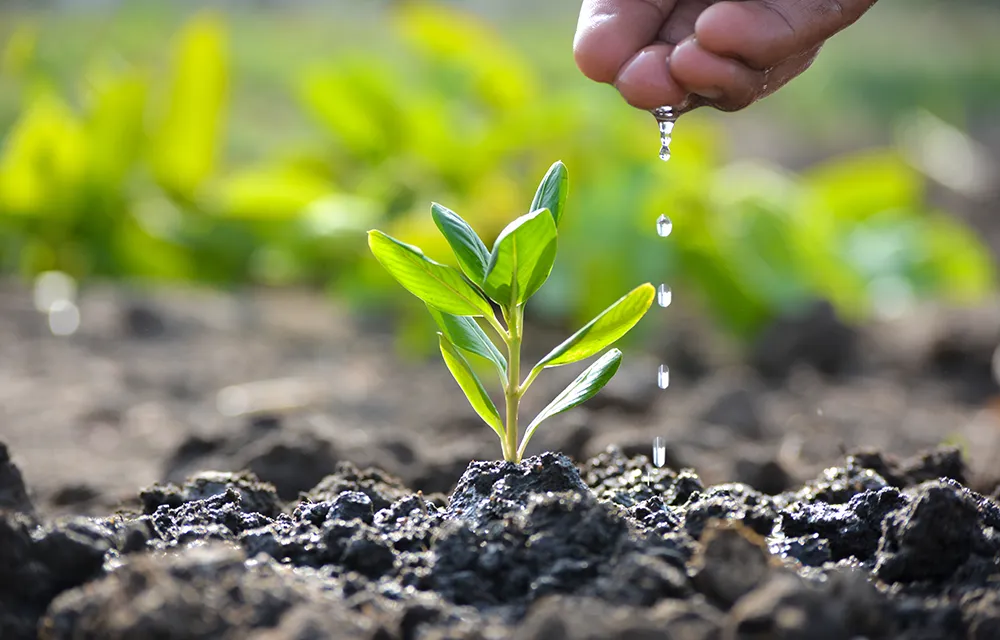
There are many different viable processes in charging Biochar and, thus, producing terra preta soil-like substrates. These variables are adjusted and modified depending on location, culture, climate, and existing techniques. Many of these procedures have evolved over time or in accordance with good agricultural practice. While there is no universal formula (although patents have already been registered), the following basic principles hold:
- Enough moisture present so that nutrients can dissolve and the pores of the Biochar can charge.
- A high diversity of organic nutrients in order to prevent shortage of certain nutrients.
- The most important nutrients for microbial colonization are organic carbon and nitrogen, which are particularly limiting in fresh Biochar until charged/inoculated.
- The C / N ratio of the Biochar-substrate should be 25 to 35
- Ideally, the duration of the ageing of the inoculated Biochar before application should be at least 14 days and should be kept moist and covered under a tarp.
- Inoculation with soil-borne microbes through the addition of humus-rich soil, compost tea, compost, or by selected microorganisms.
Simple guide to making compost tea for inoculating Biochar
Biochar is not a fertiliser, but rather a nutrient carrier and a habitat for microorganisms. Our Biochar is like a high performance battery which must be fully charged before you can use it.
- Guide or documentGuide for inoculating biochar: making compost tea
How to apply it
Vegetable & Flower Beds
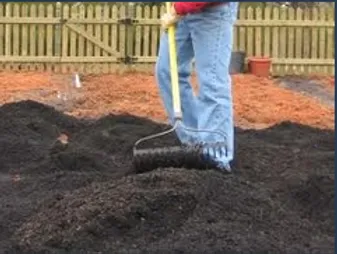
Spread 1/2-1" over area and incorporate with other amendments to 4"-6". Wet down the Biochar and amendments after you have added them. If you have raised beds, Biochar only need be added to those areas. Typically this is a one-time addition of Biochar, and ideally less and less amendments will be needed the next seasons due to Biochar's ability to hold on to nutrients.
Starts, Seedlings & Plugs
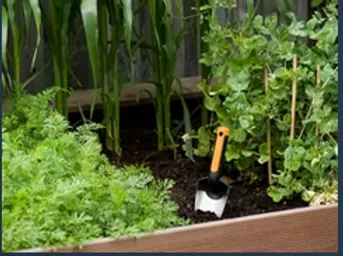
Lay a thick line of Biochar along the planting line & dibber or trowel into the seeding medium prior to planting seedlings or plugs. No more than 5% Biochar is required with other amendments. Water after incorporating the seeds/plugs or starts. Having seeds exposed early on to Biochar gives them the best possible start at germination and growth.
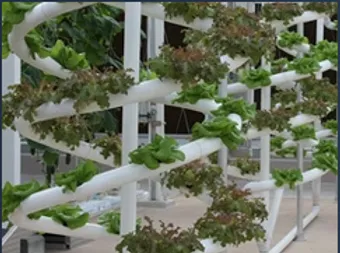
Hydroponics
Add 1 tablespoon of Tree of Life Biotech Powdered Biochar to 1 quart of your liquid nutrients. Our Powdered Biochar has exceptional cationic & anionic exchange capacity. The product has been used in controlled trials with liquid nutrients and the results were substantial, greater roots, more vigorous plants, and greater budding.
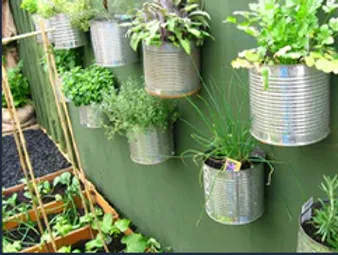
Pots
For seeding trays, dust on Tree of Life Biotech Medium Biochar, in the seed row. Make sure the Biochar is in contact with the base of the trough so it will be in contact with the seeds rooting area. For filling flats or media for pots, add 2-5% Biochar to the medium. The addition of Biochar increases aeration and water exchange with the roots. It makes nutrients more bio-available.
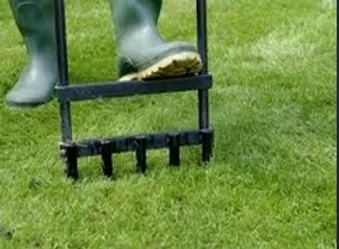
Lawns & Turf
For lawns & turf use the Tree of Life Biotech Small or Powder size Biochar. Aerate mechanically or use forks with tines to make 3"-4" holes. Use lawn fertilizer spreader or sprinkle in Biochar to fill the holes. Water in. The Biochar will spread out on its own. Typically this is also a one time application and less amendments as well as water will be needed each season.
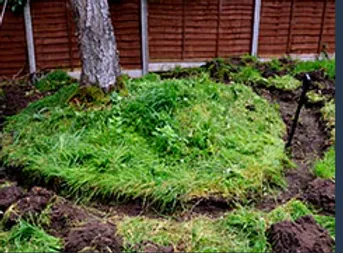
Trees
Make a trench at least 4' deep around the tree's "dripline" - the drip line refers to the areas you would get once the tree has reached its mature size, if you drew a circle on the soil corresponding to the size of the tree's crown. Apply biochar as close to tree's root zone as possible. For trees you can also use an "air excavation tool". Then cover with compost, other amendments and soil.
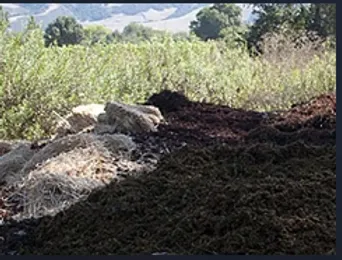
Composting
For composting, use Tree of Life Biotech Chip size Biochar. In a tumbling composter, mix 5% Biochar by volume and incorporate into the composting process. For pile composting shake a layer of Biochar with each addition of organic material. The addition of Biochar will speed up the composting process, reduce odors, and ultimately give you a higher-quality compost. Ideally, you would add the Biochar early in the state of composting.
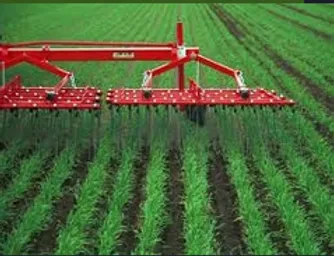
Targeted applications
Where precise data on soil characteristics and farm machinery equipped with geographical positioning is available, it is possible to apply Biochar preferentially to areas of fields where fertility is low or drought or water-logging challenges exist. Efficacy can be seen at as low as 2% application. Premix Biochar with other amendments prior to adding to machinery.
How to videos for Biochar activation/inoculation
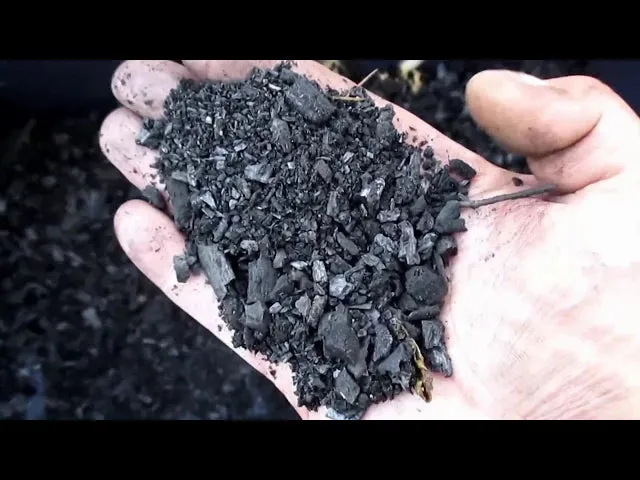 Activating and charging biochar for the garden (Plant Abundance)Watch on YouTube
 How to activate biochar: three ways to inoculate (The Green Cabby)Watch on YouTube
 Biochar inoculation with Dan Hettinger (Living Web Farms)Watch on YouTube
 Biochar inoculation, part 2 (Living Web Farms)Watch on YouTube
Additional note
Use of unfiltered city tap water should be avoided as a means of irrigating your garden as it contains chlorine which kills the soil microbes which are beneficial to plants. Therefore, one should use a good inline activated carbon filter to remove the chlorine before watering your garden or fill some 5 gallon buckets of tap water and allow it to sit 24 hours to allow the chlorine to evaporate out of the water. Another alternative is to harvest rain water and store in 55 gallon plastic drums.