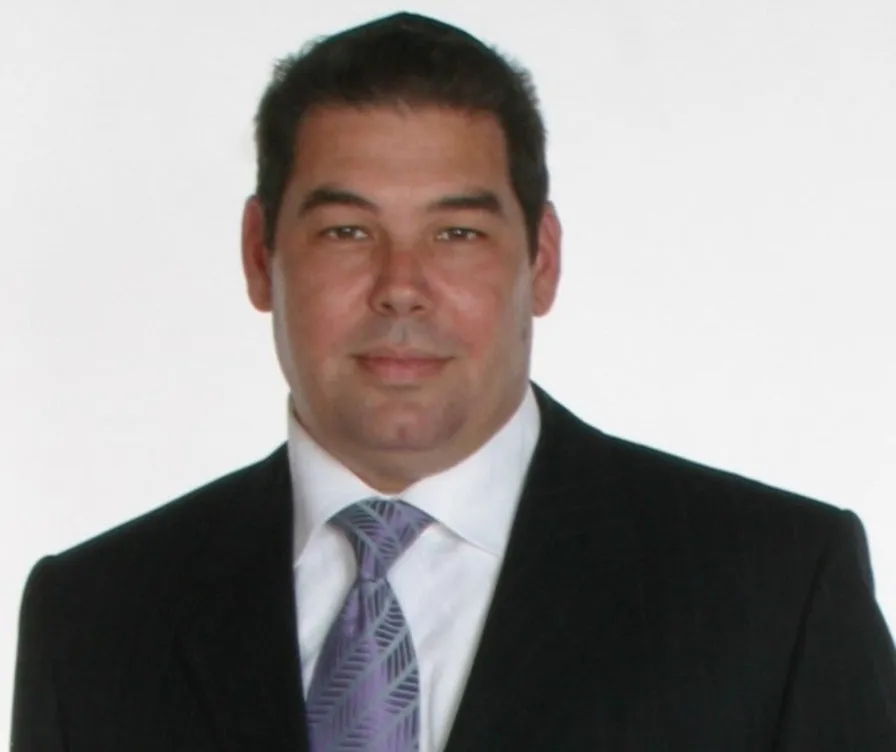
Prof. Pinchas Mandell
Chairman and Chief ScientistLeads the research pipeline and the engineering of the kilns that make the material.
BiographyPremium engineered biochar
Three scientists set out to engineer one material that could feed soil, clean water, strengthen what we build and store the energy we run on. It starts with a tree.
Layer I The story
Three scientists share one conviction: the most useful material of this century will not be invented from nothing. It will be grown, then engineered.
People have worked charred wood into soil for more than two thousand years. The dark, fertile earths of the Amazon basin, known as Terra Preta, are still richer than the ground around them. Prof. Pinchas Mandell, Dr Reji Kurien Thomas and Prof. Ruggero Santilli set out to take that ancient idea further: a consistent, high-purity engineered carbon, made at scale, that industry can build with. To make it, Tree of Life partnered with Biochar Now, whose kilns and process have been refined over 13 years.
Their backgrounds span materials science, engineering and physics, and the company's research reaches from kiln design to the meeting point of quantum biology and engineered carbon. The result is a single material with a growing list of jobs: in soil, in water, in concrete and plastics, and in the storage of energy.
Mightier than the tread of marching armies is the power of an idea whose time has come.Victor Hugo
Leads the research pipeline and the engineering of the kilns that make the material.
Biography
A 32-year career across engineering and the sciences, and the author of the company journal.
Biography
A physicist advising on materials science, energy storage, supercapacitors and fuel cells.
Biography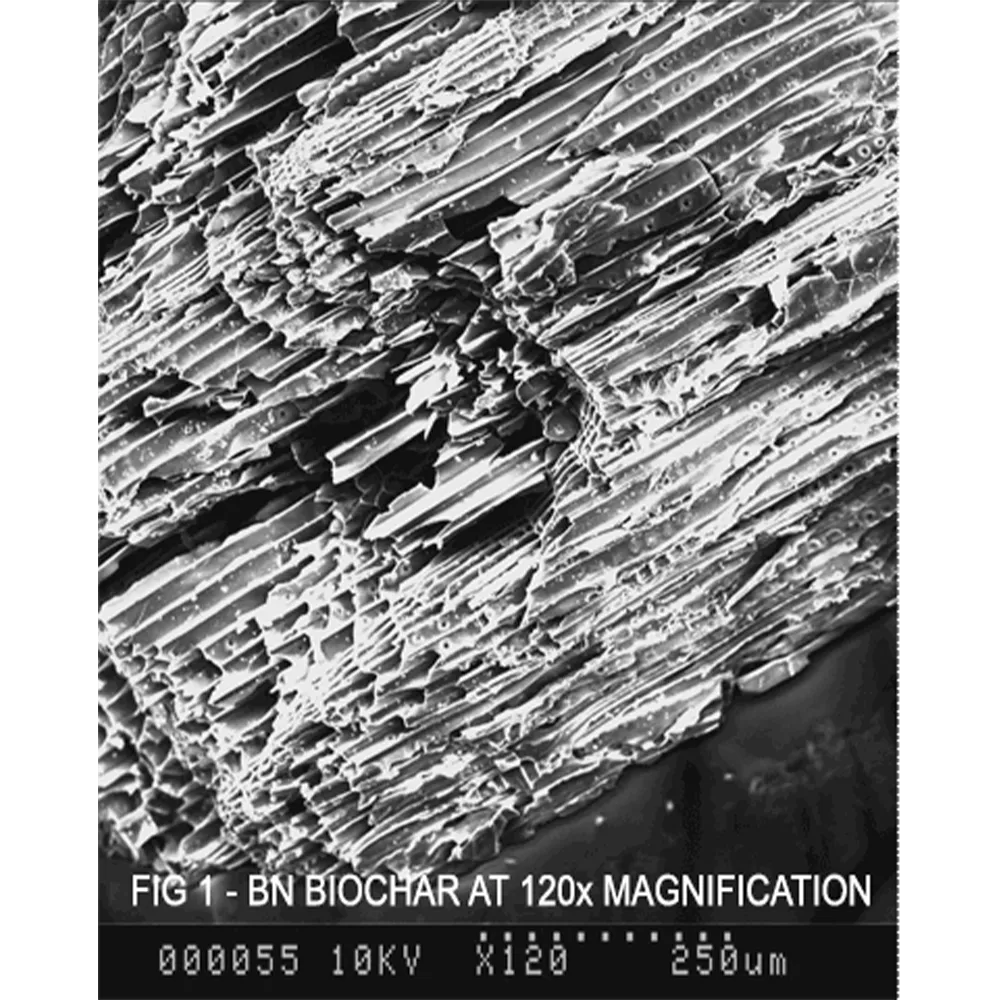
Layer II The material
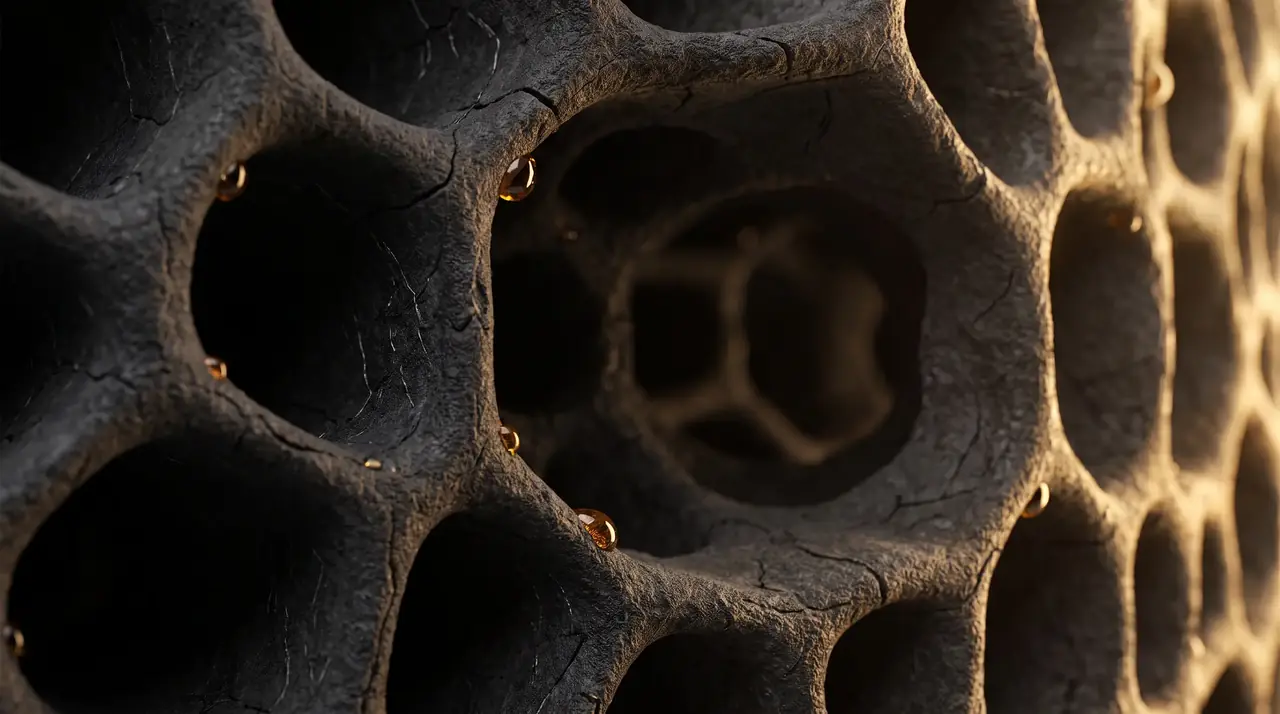
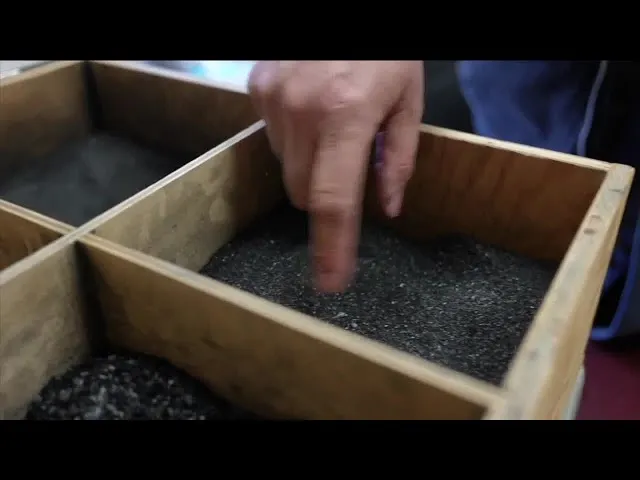
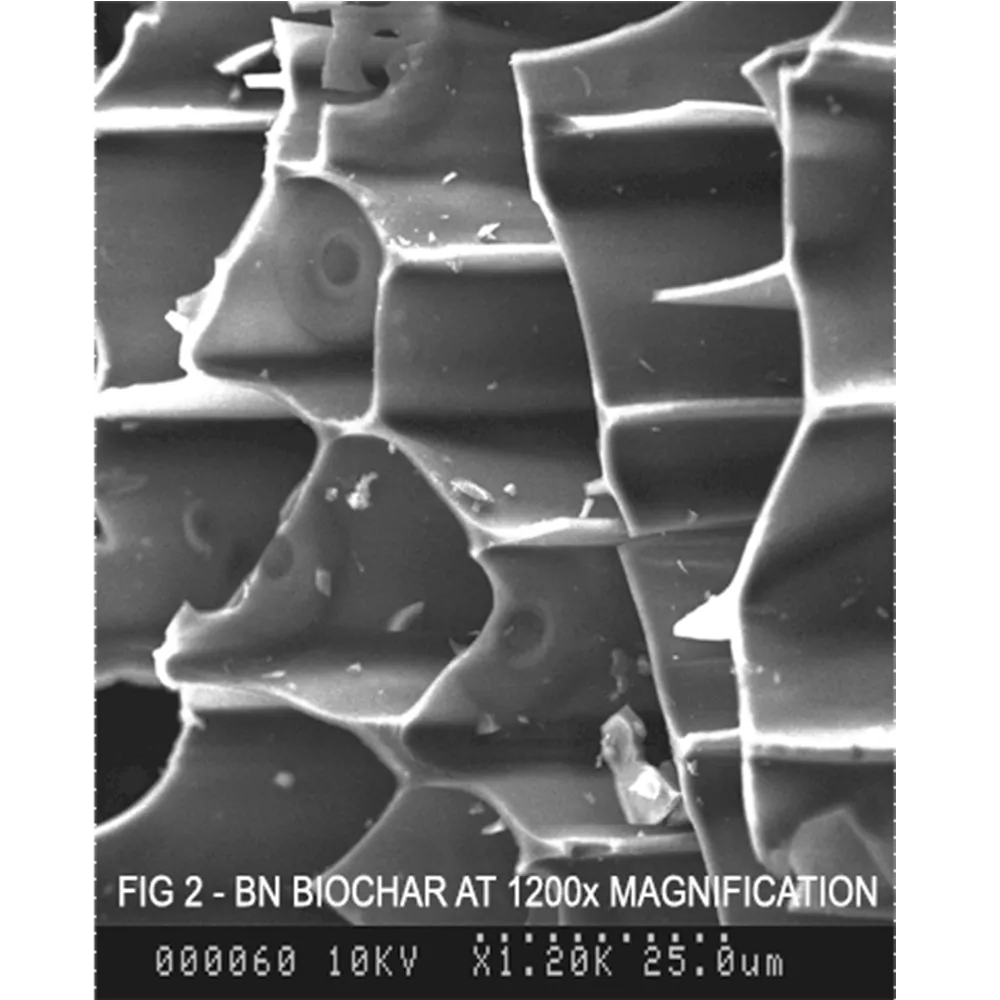
Under the microscope, engineered biochar is a lattice of long, open pores. A single gram holds between 300 and 500 square meters of surface. Fourteen grams, about half an ounce, has the surface area of a football field.
It has both cation and anion exchange ability, so it attracts and holds molecules of either charge. That is why the same material can bank nutrients and water for roots and bind heavy metals.
Figures as published by Tree of Life and its manufacturing partner, Biochar Now. See the lab reports.
Layer III The fire
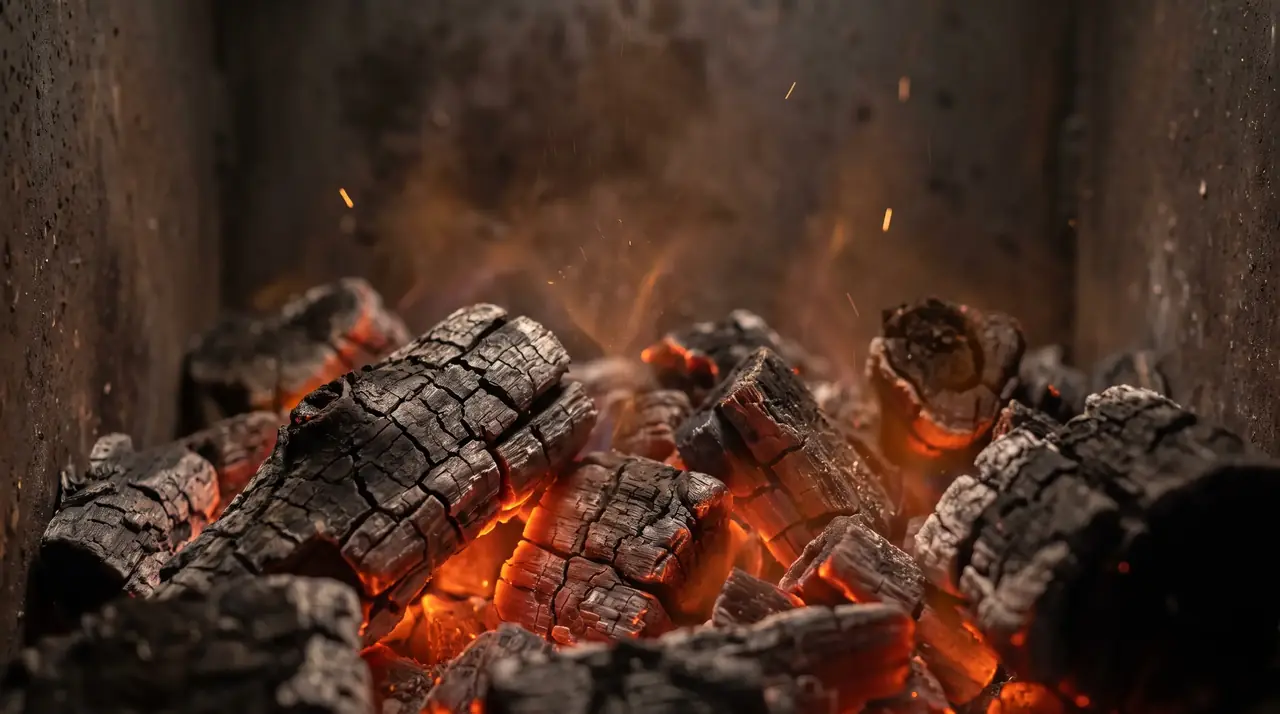
Most biochar is flashed for five or ten minutes at low heat, which leaves the pores clogged with tars. Ours is made by slow pyrolysis: eight hours in a sealed kiln, climbing past 1,200°F, while a control system reads 40,000 data points every second to hold each batch to the same recipe.
The feedstock is waste: beetle-killed trees cleared from forests. A kiln takes about 11 cubic yards of wood and returns roughly 600 lb of biochar. The kilns and the process are covered by 17 issued patents held by our manufacturing partner, Biochar Now.
Layer IV The branches
The carbon lattice that holds water for a seedling can also filter a lake, reinforce a road or carry charge in a battery. These are the branches we are growing, each with its own research and its own page.
Layer V The evidence
We would rather show the sources than ask for trust. The library holds 143 documents: 125 published papers and articles, alongside lab reports, presentations and field guides, sorted by use.
| Metal | Symbol | Starting mg/L | Removed |
|---|---|---|---|
| Aluminum | Al | 638 | 100% |
| Arsenic | As | 203 | 100% |
| Barium | Ba | 0.17 | 66.0% |
| Beryllium | Be | 0.16 | 99.0% |
| Cadmium | Cd | 0.015 | 100% |
| Chromium | Cr | 166 | 100% |
Layer VI The roots
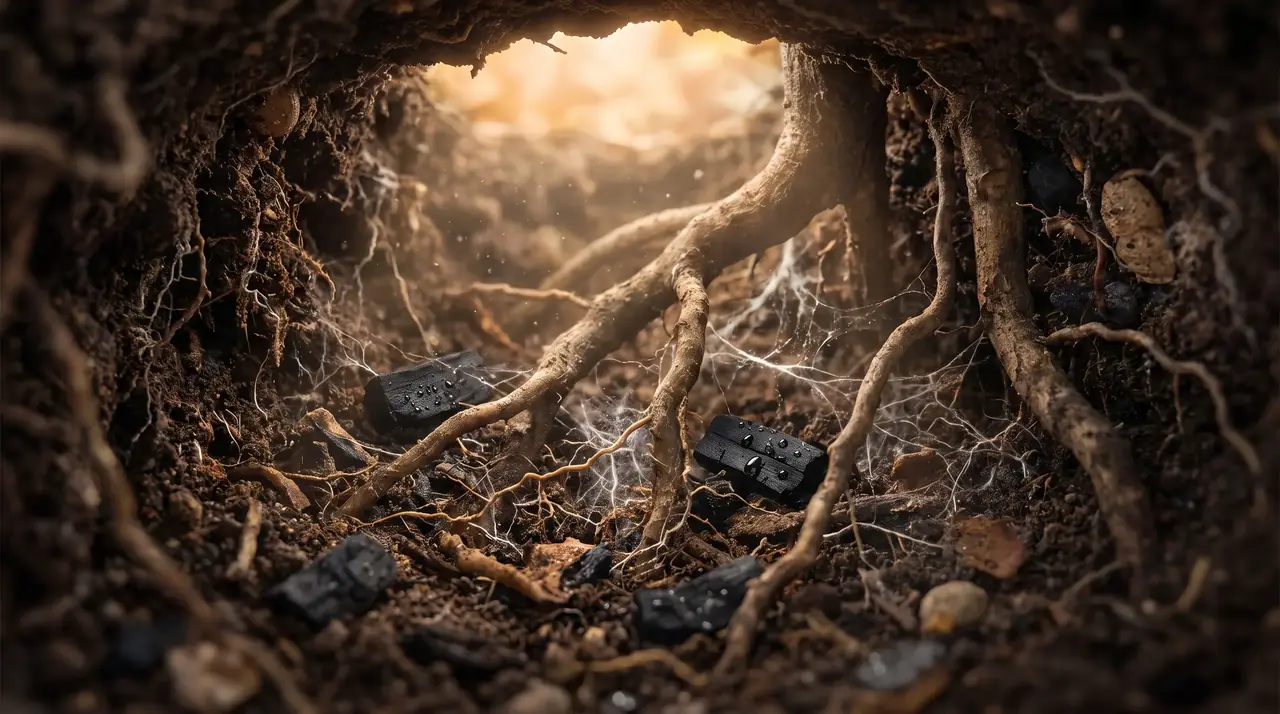
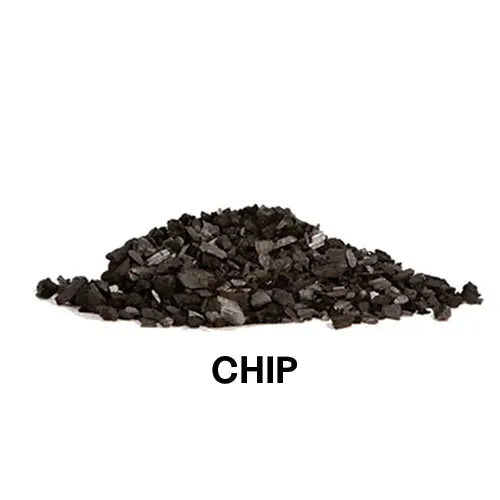
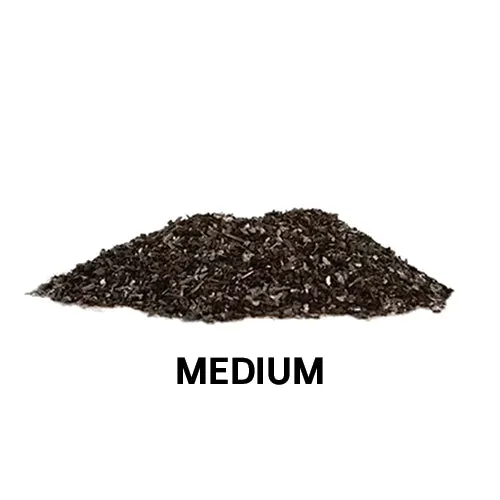
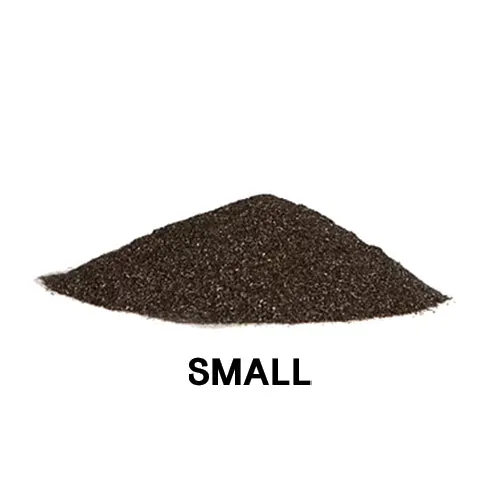
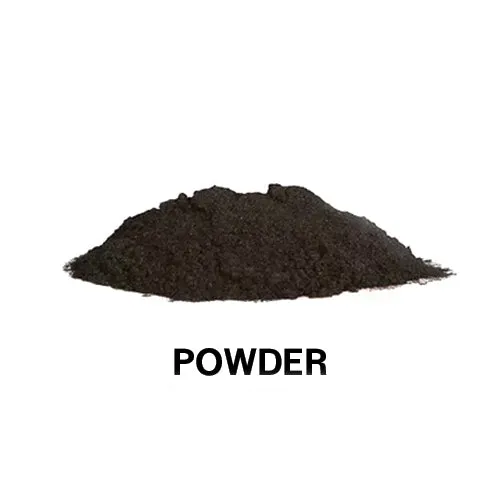
Four particle sizes, from one-inch chips to powder as fine as baking flour. We sell by volume, not weight. Biochar holds almost six times its weight in water, so selling by weight would not be fair to you.
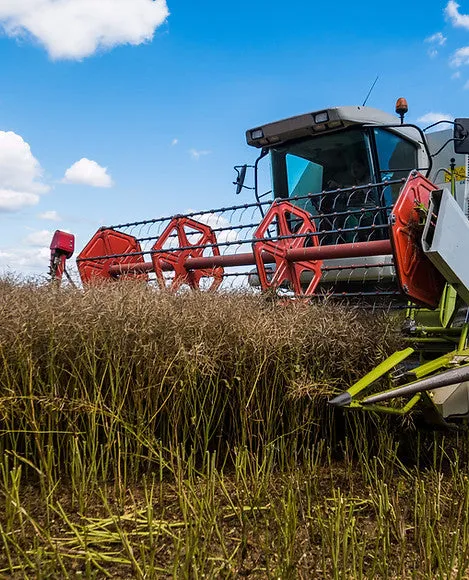 Farmers and ranchers
US farmers and ranchers can be paid under the Soil Carbon Amendment practice 336. We guide you through the application.
Sign up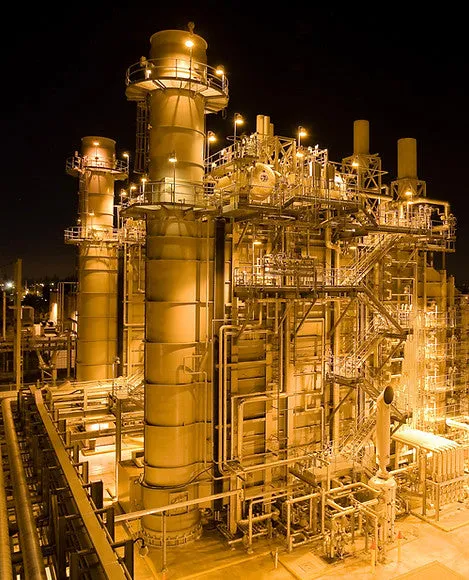 Industrial customers
An additive or filler for concrete, plastics, asphalt and cardboard pulp, and a medium for soil and water remediation.
Request a quotationPrefer Amazon? Visit our Amazon store for free shipping.
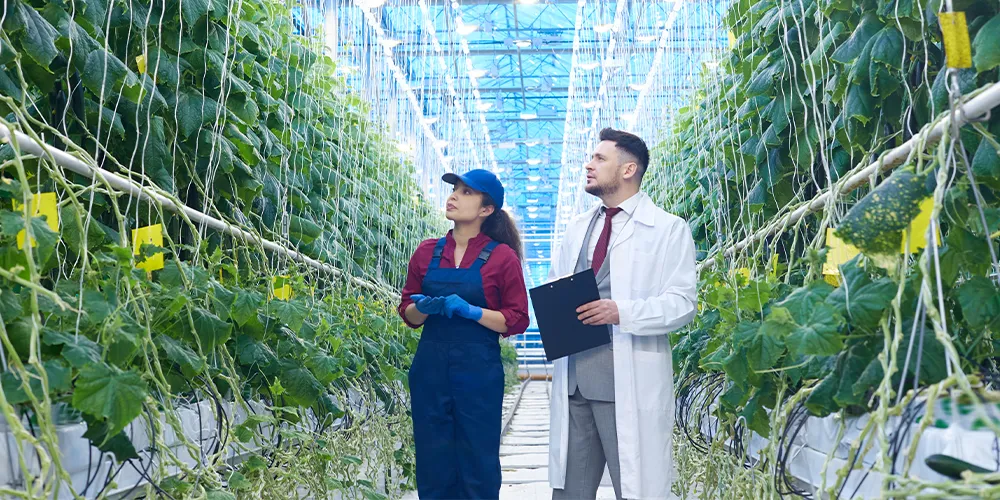
Partner with us to develop sustainable agriculture initiatives with farmers/ranchers and enhance food security in your communities. Encourage the construction industry with financial incentives to utilize Biochar to be added to concrete and asphalt in order to substantially improve these building materials while making them carbon neutral or even carbon negative and qualifying for receiving carbon credits which can be sold or traded in the international markets giving further financial incentives to adopt Biochar for their industries.
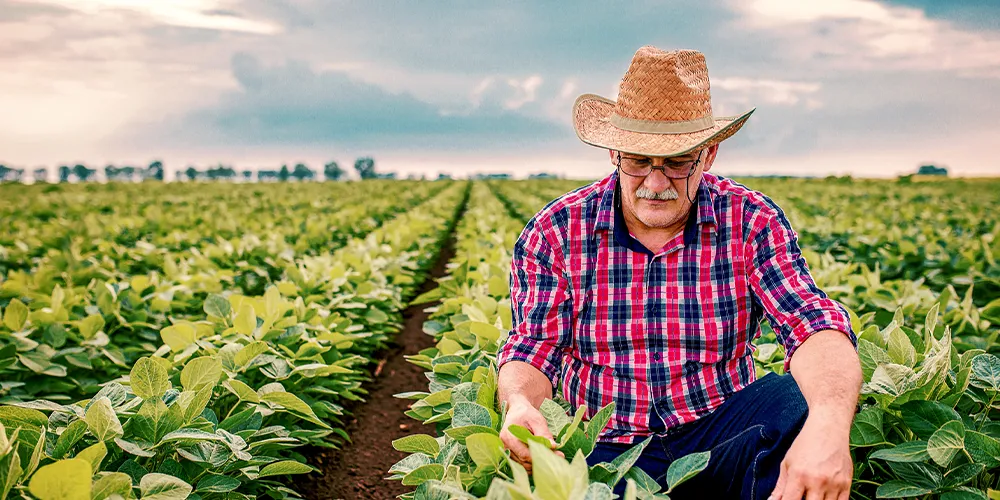
Experience the transformative powers of Biochar in your fields, greenhouses, and gardens. Decrease water and fertilizer inputs by 50%+ while increasing yields by 100% or more. Farmers/Ranchers sign up for the USDA Carbon Soil Amendment Practice 336 program which will pay for you to apply Biochar to your crops and forests as a one time procedure with a lifetime of benefits. Tree of Life will assist and guide you through the process.
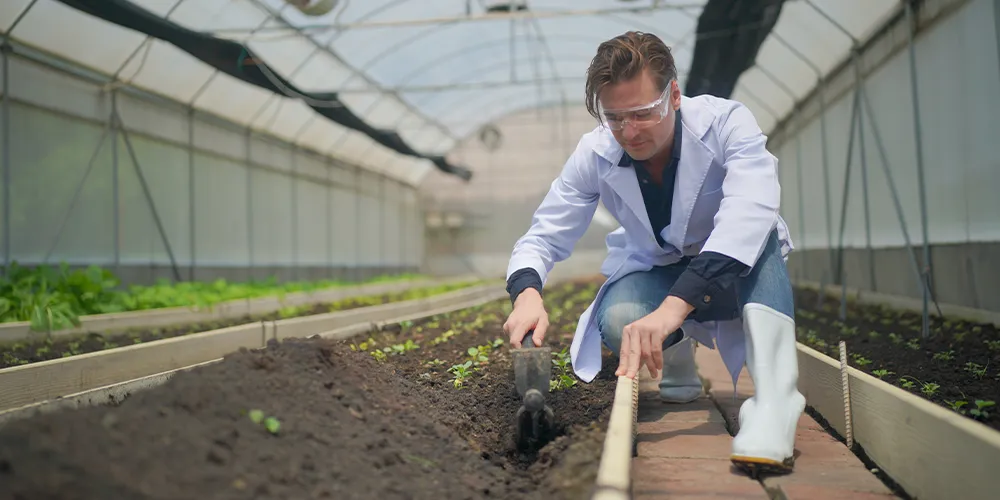
Collaborate with us on groundbreaking research to advance sustainable regenerative agriculture and build a healthier future and guarantee food security for the growing world population. Collaborate with us on groundbreaking research to advance the use of our premium engineered Biochar for its many uses in the construction field, soil and water remediation of heavy metals and toxic chemicals, green energy storage (batteries), hydrogen fuel cells, medical & pharmaceutical application, desalination of sea water, etc.
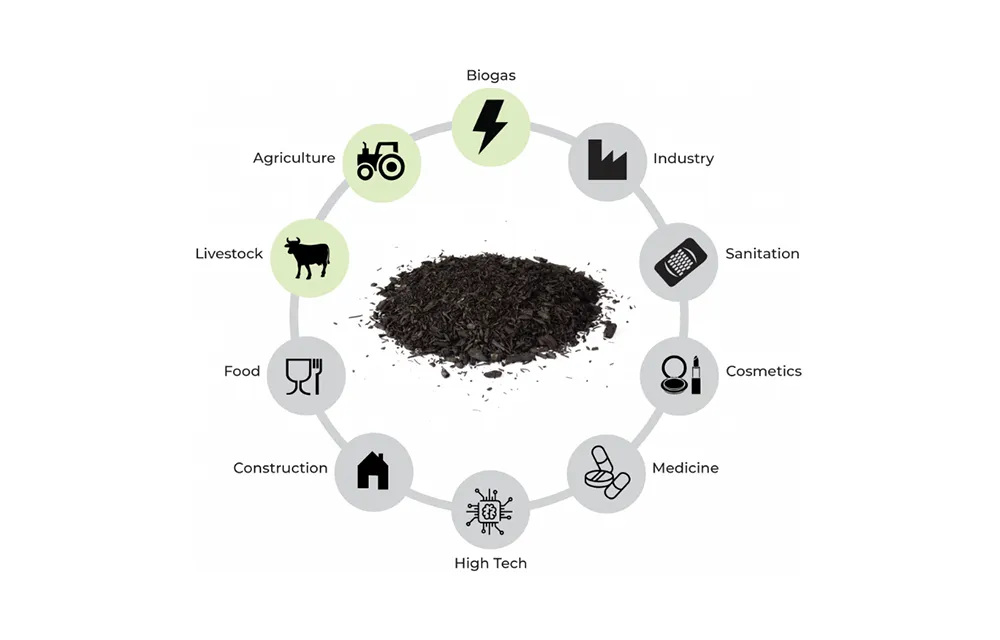
Due to the physical, chemical, and electrical properties of our Premium Engineered Biochar among them being both cationic & anionic and having a very large active surface area per gram, allows it to be used in many industrial applications that include the construction industry, steel & aluminum industry, cardboard box industry, sewage treatment industry, pharmaceutical industry, soil & water remediation industry, and many others.
We work hand in hand with various industries to provide them with the finest quality and consistency Biochar in the world which can enhance and improve their products and services while reducing costs and substantially reducing or neutralizing their current carbon footprint. We can also produce specialized engineered Biochar with specific qualities and characteristics according to the clients needs & requirements.
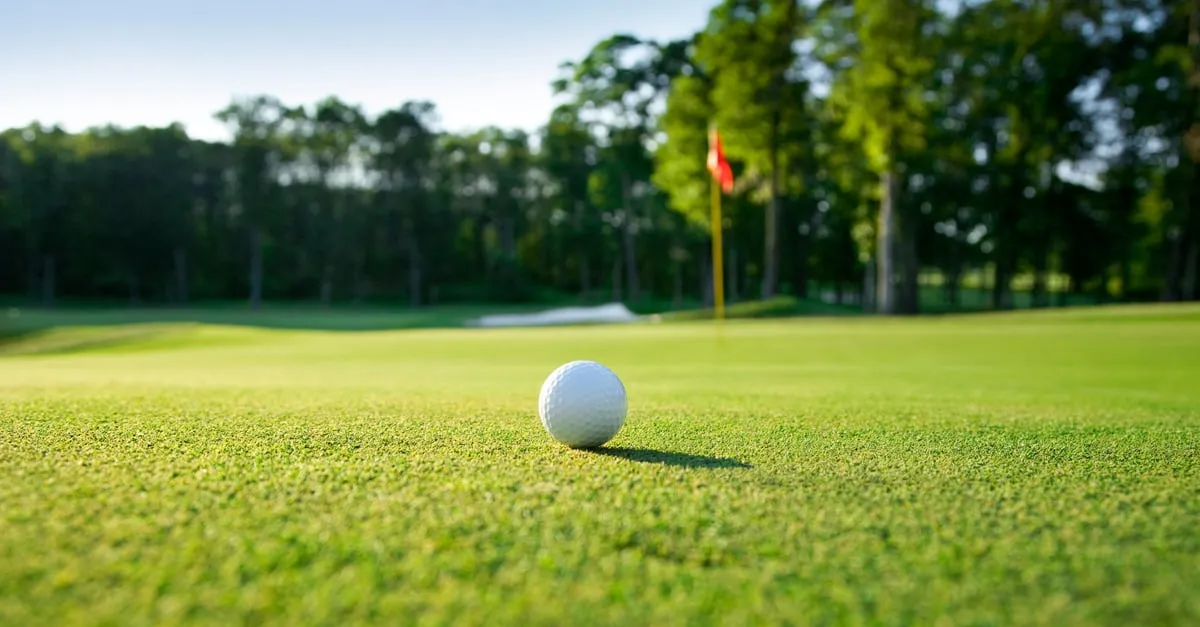
Usage of our Biochar with a national lawn care company shows a 100% increase in turf growth with less than 2% volume of Biochar in the root zone. Usage with golf courses show a reduction of turf water usage of at least 50% with 3% volume of our Biochar in the root zone. The application of the Biochar is a one-time procedure with a lifetime of benefits. Using our Biochar for lawn care will not only save half on water, but also on fertilizer costs as currently more than 80% of the fertilizers used leaches into the soil and is wasted, while at the same time contaminating our water aquifers.
Our partner Biochar Now manufactures the material. These are the approvals, awards and coverage listed for it.
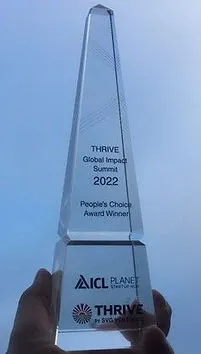
Biochar Now LLC is honored to have won the People's Choice Award from The Global Impact Challenge. It is an honor to be recognized as a top 10 clean tech technology in the world out of over 500 other technologies. It is especially humbling to be favored by the public in what we do compared to all the other technologies.Biochar Now, manufacturing partner
Biochar Now featured in "Five Tech Innovations That Could Help Save the Planet".Read at Newsweek
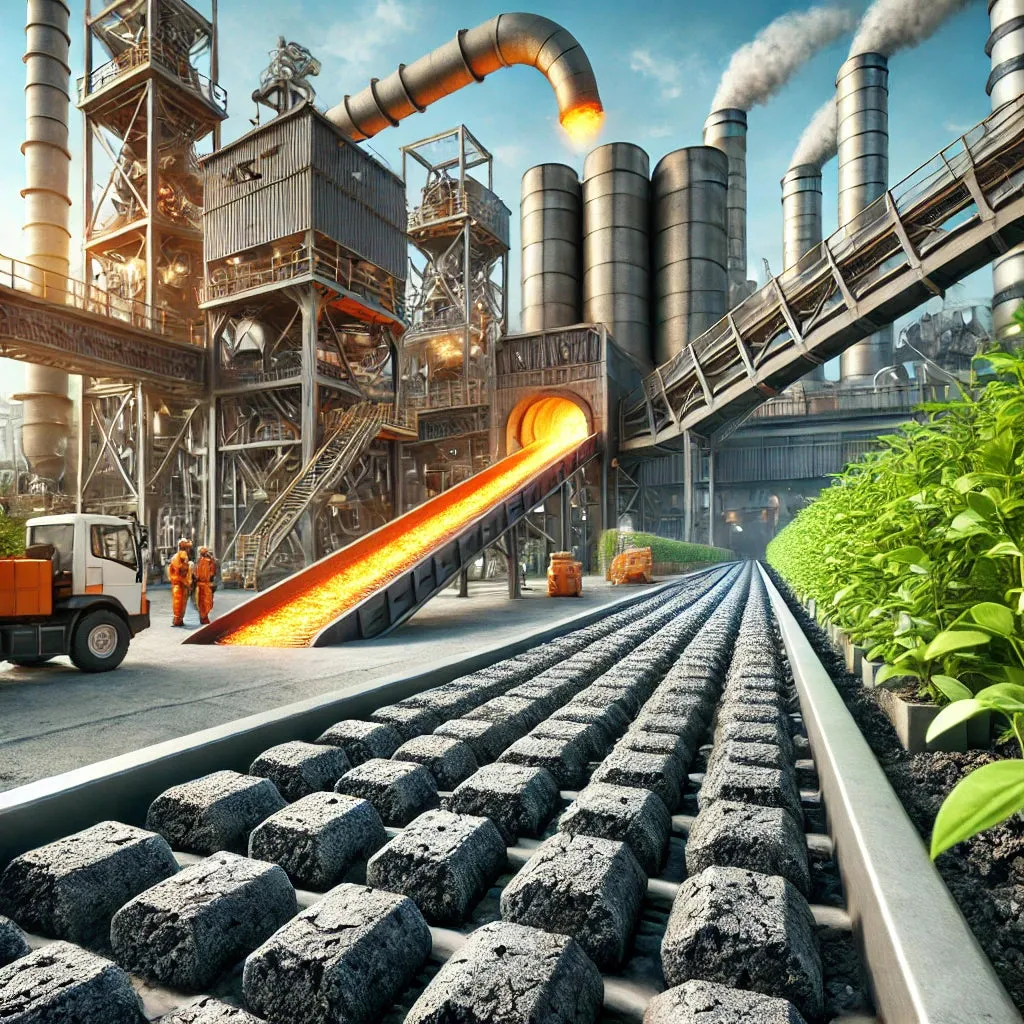
We examined the use of engineered biochar in the steel and cement industries. It will help reduce emissions, enhance efficiency, and lower production costs. We provided examples...
Read
In an era defined by the urgency of climate change, the depletion of natural resources, and the need for sustainable energy solutions, cutting-edge science is emerging as the key to...
Read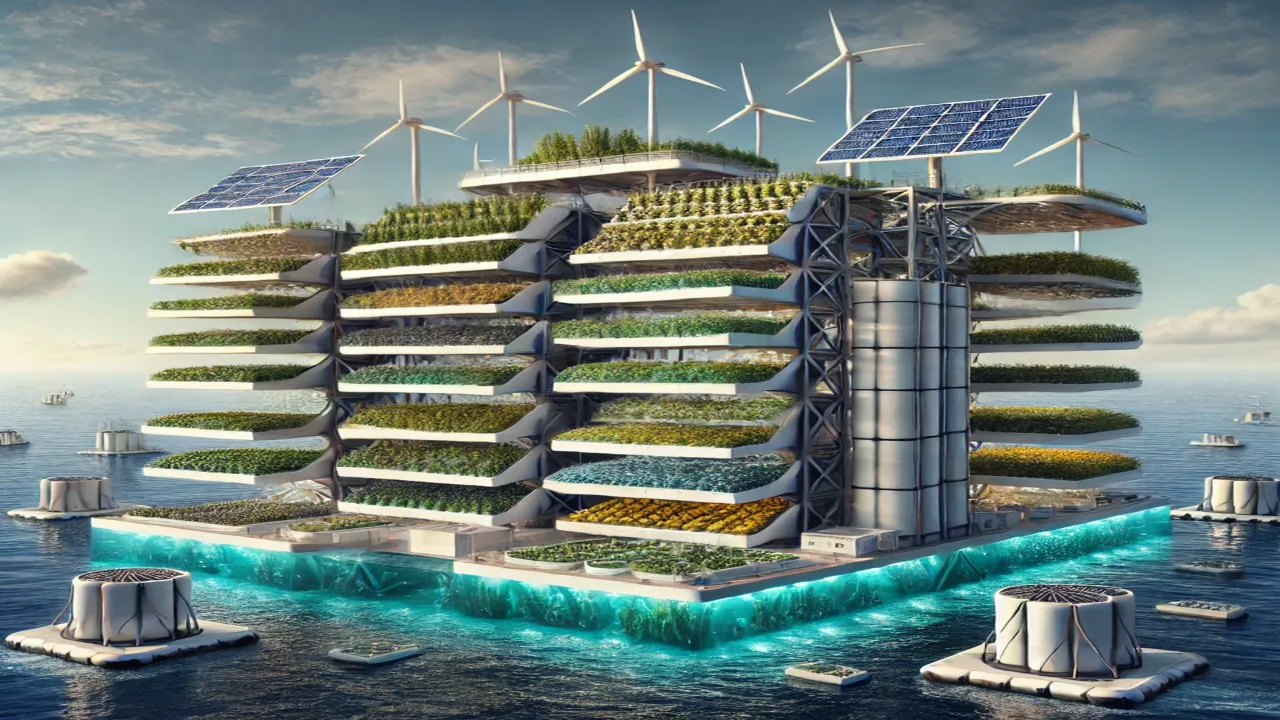
In the face of urgent global issues like food insecurity, water scarcity, and environmental degradation, self-sustaining vertical ocean farms with premium engineered biochar present a...
ReadOur vision
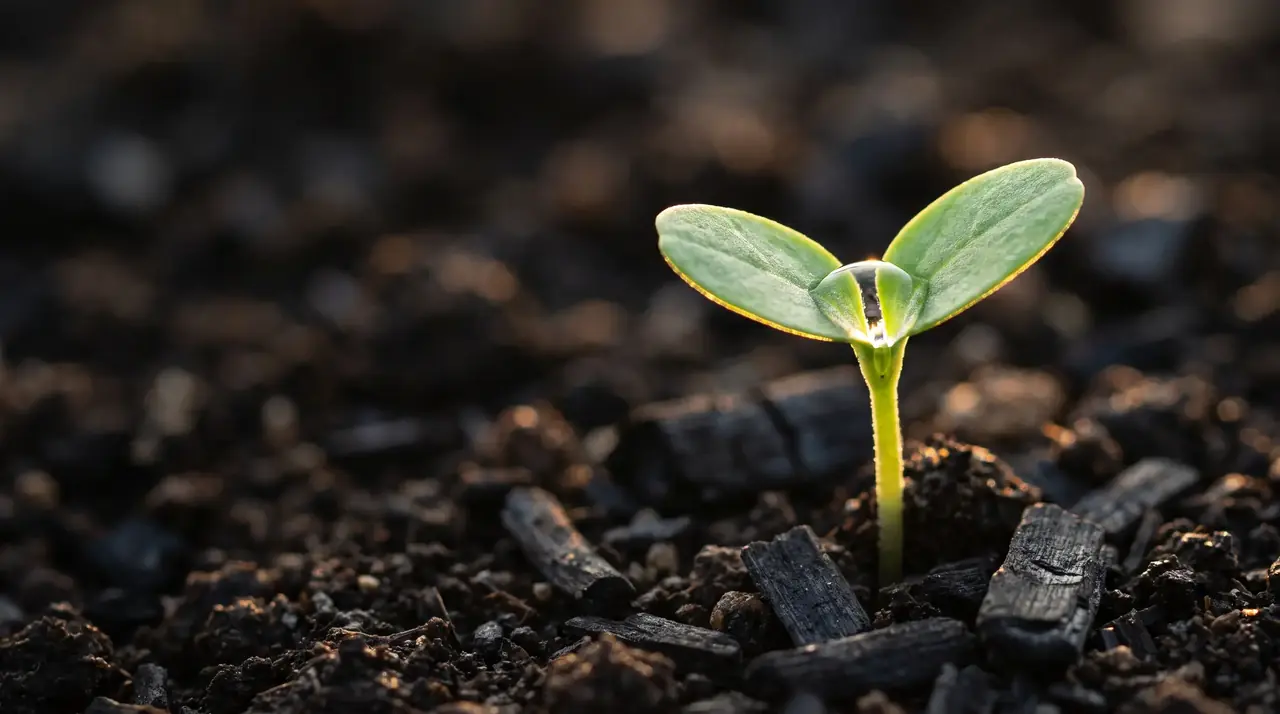
Tree of Life starts with turning dirt, which is dead, into soil, which is alive. A world where every household has access to fresh, healthy, homegrown food may seem idealistic, but it is not out of reach.