 Improves soil structure
 Retains nutrients
 Reduces water consumption
 Balances soil pH
Biochar history
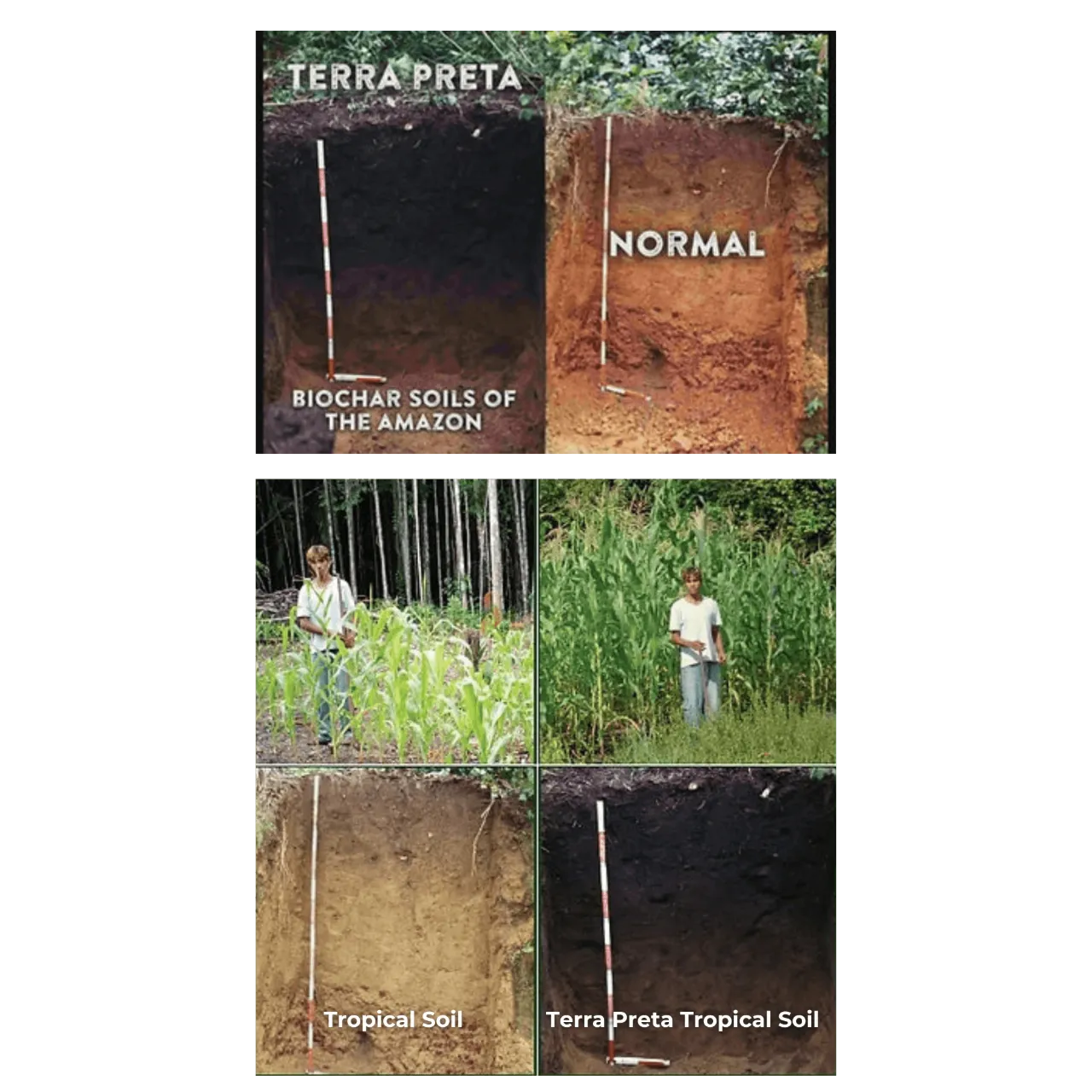
In recent years geologists have been researching black soil in particularly fertile areas of Amazon soil. In close proximity to archaeological finds indicating ancient agricultural settlement in the area. Research and mapping of the black soil known as Terra Preta contain activated carbon mixtures, bones, and pottery fragments. These lands date to an early period of 500 BC. These areas were found to be very fertile with a high amount of organic matter compared to areas adjacent to them. (See the picture above.)
Biochar is a combination of the English words: biology and carbon that is, carbon with biological activity. In the last decade, researchers have begun to study the properties of Biochar and its necessary integration into modern and industrialized agriculture characterized by the current significant loss of soil fertility.
 Short TED Talk on the Ancient History of BiocharWatch on YouTube
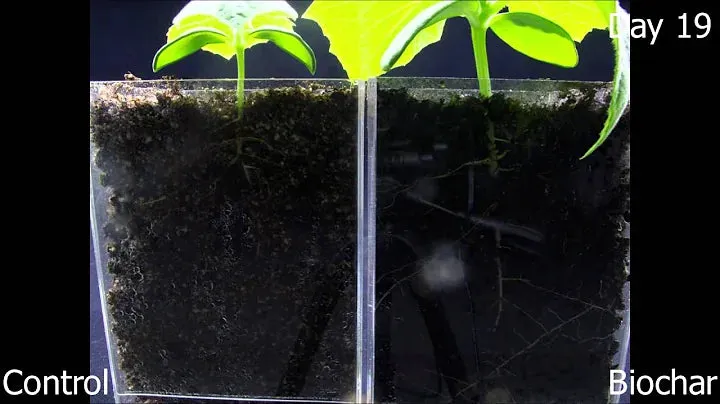 Plant Time Lapse Video with & without BiocharWatch on YouTube
Microscopy of Biochar
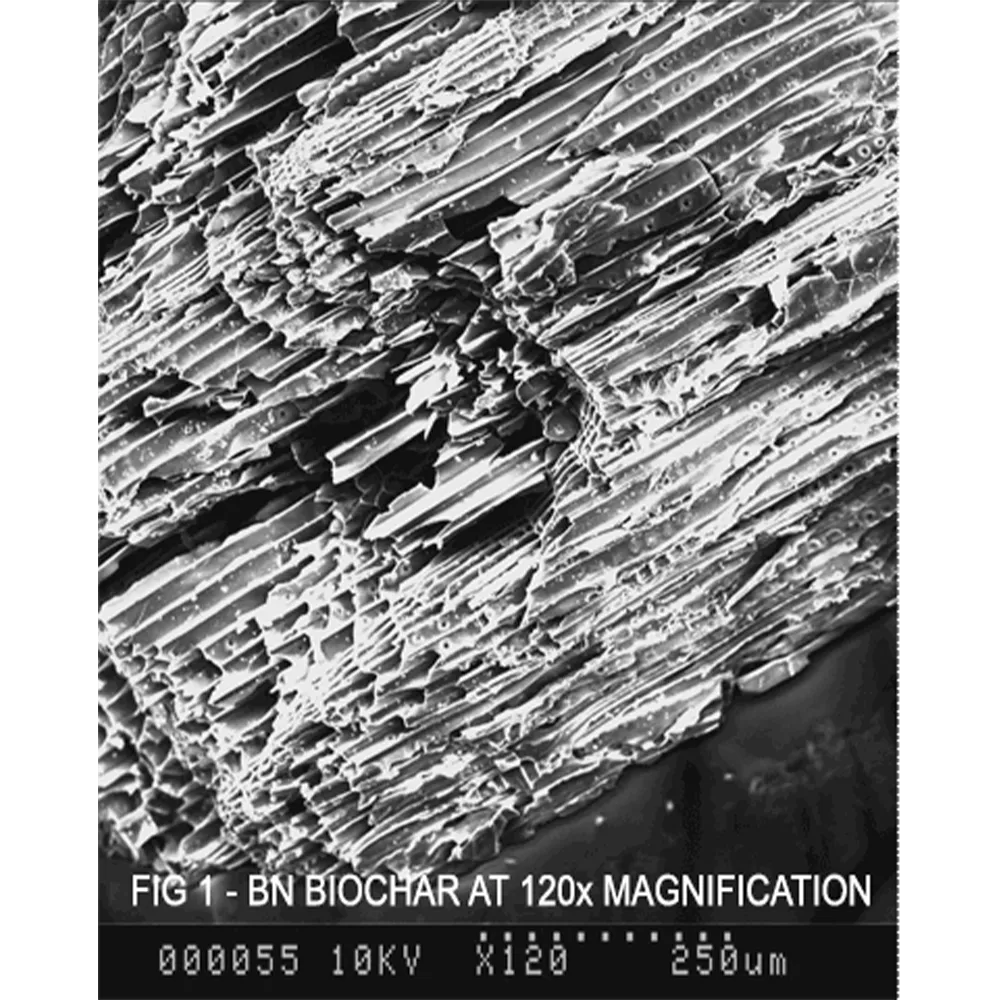
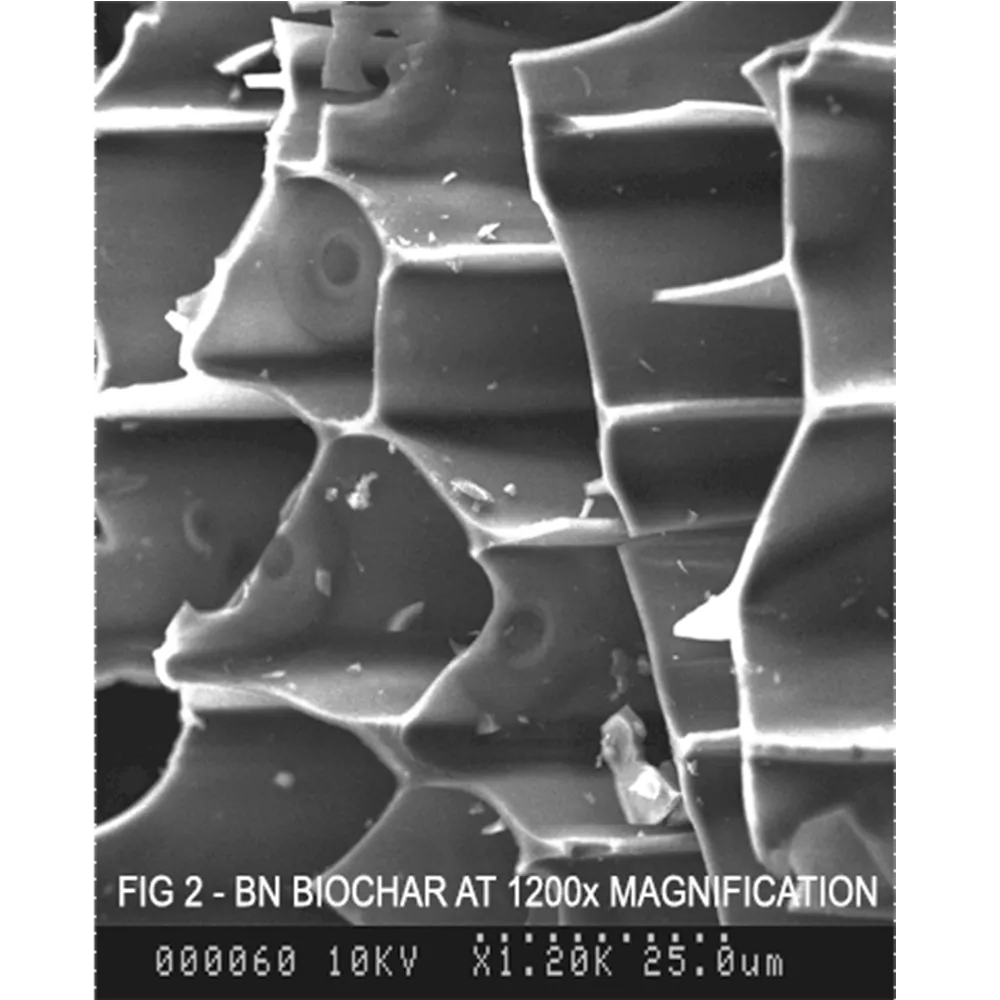
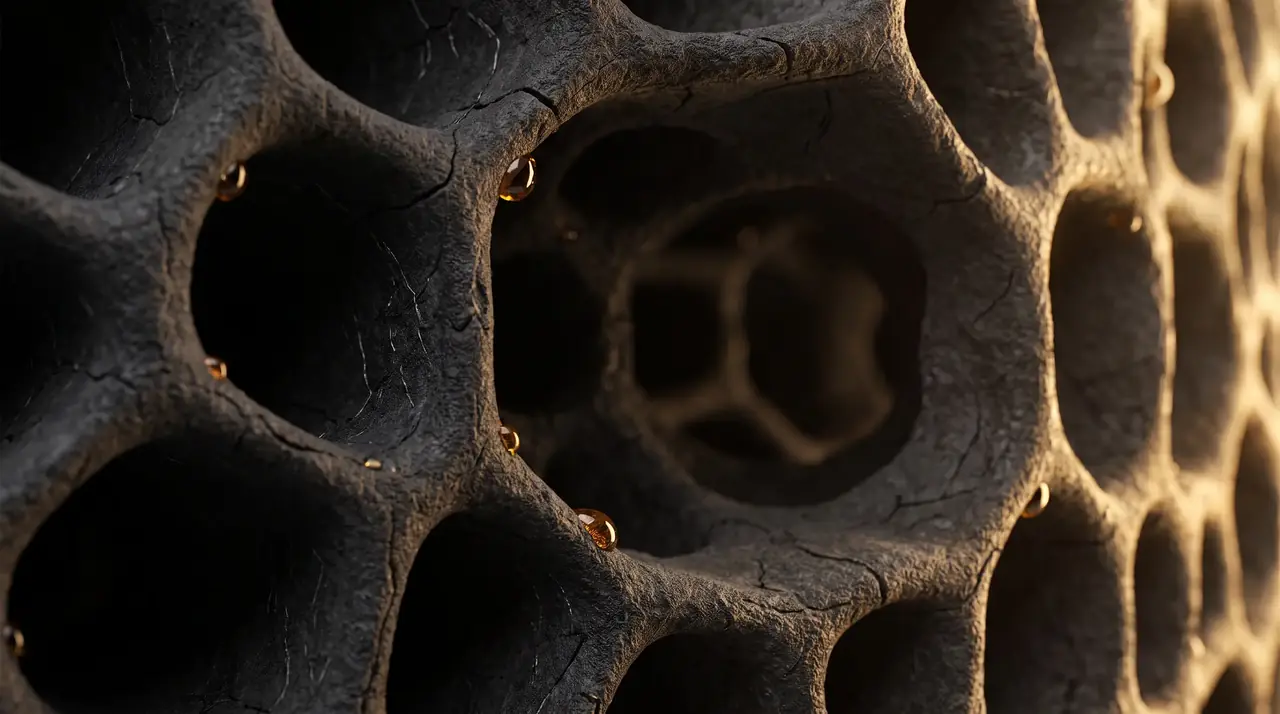
Note the nano tube structures. This quality gives Biochar a very high surface area of between 300-500 square meters per gram. To give some perspective, just 14 grams (1/2 ounce), has the same surface area as a football field.
How we produce biochar
Our Biochar is made from dead beetle kill trees cleared from forests (but can also be produced from any waste biomass), which undergo a pyrolysis process in a furnace in which biomass is heated in an oxygen-free environment in order to decompose into simpler materials.
There are two types of pyrolysis, fast and slow. Rapid pyrolysis uses moderate to high temperatures and rapid heating of wood chips. Slow pyrolysis is characterized by gradual heating over a wide range of temperatures for Biochar production.
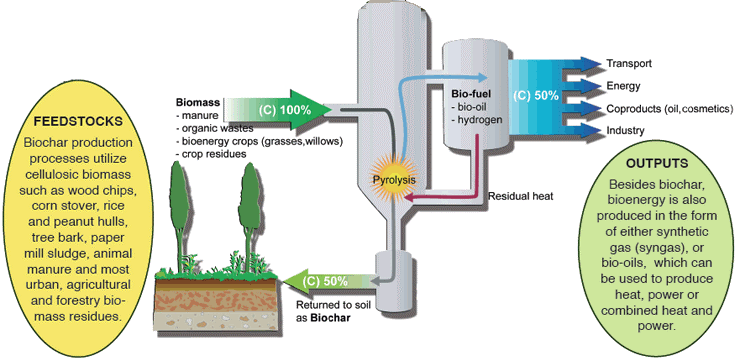
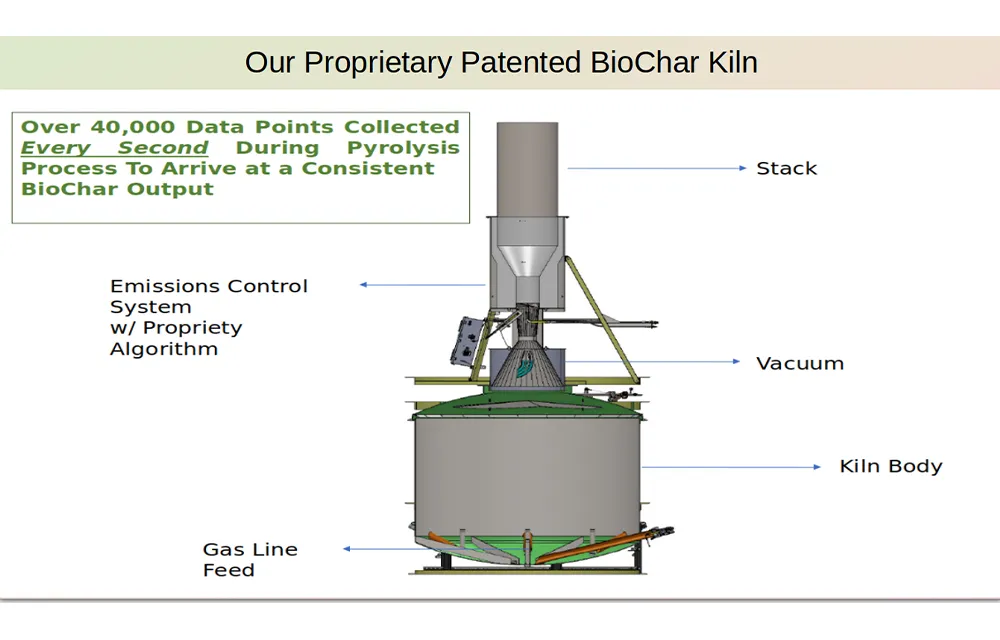
Biochar Now uses a unique and proprietary furnace to perform a process of slow and controlled pyrolysis over 8 hours in order to allow slow processing of different sizes of wood, to produce a consistent, high-quality Biochar. Our Biochar is characterized by a number of key parameters.
Our Biochar is a lightweight material, thanks to many pores, and a large surface area, which reaches 500 square meters or more per gram and looks like a sponge full of holes. Biochar is used to adsorb various substances with an emphasis on the adsorption of heavy metals, and dangerous toxins found in various pesticides and their sequestration and eventual breakdown by microorganisms.
The Biochar can be "loaded" or charged with beneficial minerals and microorganisms before applying it to the soil or on the crop beds. It is important to use the right particle size of Biochar to the type of crop application required. "Different sizes, for different crop types". The application of Biochar has many effects on the properties of the soil and it becomes a supervisor for controlled release, and a bank for minerals and other nutrients, excess water, as well as a habitat for many beneficial microorganisms which make plants more disease resistant. Absorption of water and its allocation sparingly according to the root requirement prevents over-watering, waste of water and loss of essential minerals & other nutrients.
Our Biochar essentially becomes a capsule rich in nutrients, which raises the acidity level of the soil to an optimal level and is a major reason why our product is so efficient and significantly improves soil quality, crop growth, crop yields, and quality.
Did you know?
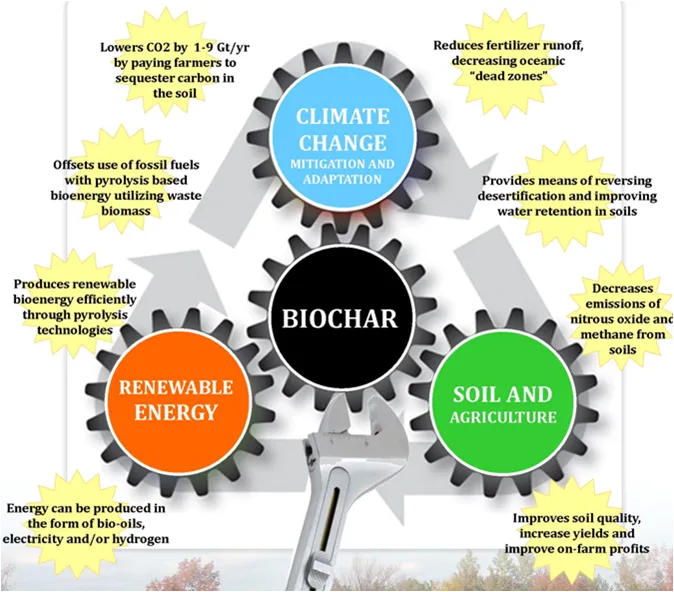
Although about 90% of the plant's energy comes from the sun, plants need additional nutrients that come through the roots. About 80% of the fertilizers and water we add to the soil are not utilized by the plant but leach into the soil and pollute the water table.
Extensive use of pesticides on crops causes low or absent beneficial microorganism activity in the soil which leads to many crop diseases which can now be prevented by the use of Biochar. In addition, we can now prevent the loss of minerals and other nutrients due to soil erosion caused by winds, rain or irrigation.
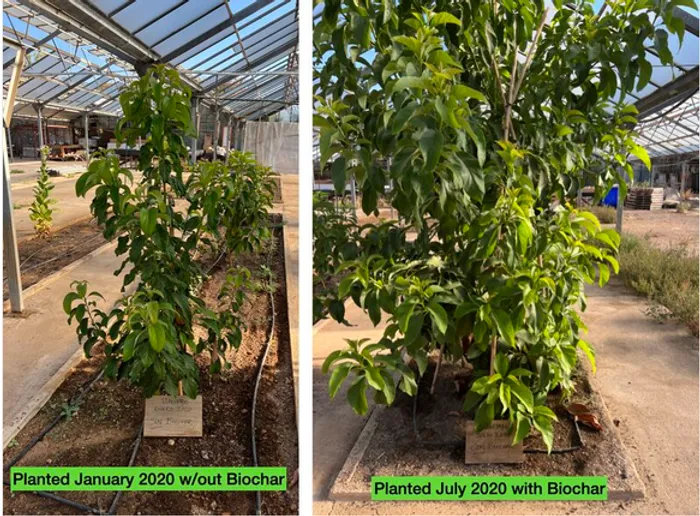
Avocado tree with & without Biochar
Not all biochars are created equal
As Biochar is also known as the New Black Gold, the last 10 years has seen a gold rush into this industry with many companies having little or no knowledge and experience in the science and engineering behind the manufacturing of premium engineered organic Biochar. Unfortunately, most companies in the world (over 350) produce a very poor quality and consistency of Biochar with a low carbon and high ash content, as well as low surface area.
In many cases the Biochar sold comes from power plant boiler ash or is manufactured using sewage sludge as the feedstock which can be very high in heavy metals and other chemicals (VOC's) such as PFAS (the forever chemicals) which can cause crop damage and contamination of the soil and the food grown in such soil.
Another problem is that most manufacturers of Biochar flash the feedstock in a pyrolysis kiln at 500-800 degrees F for only 5-10 minutes, which doesn't burn away all the tars and lignins in the nanotube structures (sponge-like pores) of the Biochar which is so important for the colonization of micro-organisms which are responsible for nutrient cycling to provide the required nutrients to plants. The pores of the Biochar are essentially clogged up with all the tars & lignins which essentially render the nano tubes and active surface area useless to micro-biology while also diminishing its capacity to adsorb nutrients for slow release to the plants, or in applications like remediation of soil & water from toxic chemicals & heavy metals which bind and encapsulates them.
Our proprietary patented batch process uses a AI driven process recipe which utilizes slow pyrolysis over a period of 8 hours slowly raising the temperature to over 1,200 degrees F which produces an Engineered Premium Organic Biochar which has many unique qualities not found in any other known Biochar to date, and include:
- Being both cationic & anionic
- High surface area of between 300-500 square meters per gram
- 87%+ Carbon Content
- Low ash content of 1.5%
- Extremely high porosity
- High cation exchange capacity (CEC)
- Binds to Salts & Phosphates
- Absorbs almost 6 times its weight in water
- 3rd party lab certified to have a 17,000 year half-life
- Verified, Certified, and Insured Carbon Credits
These unique qualities of our Biochar allow it to act as a sentinel and guard for soil health by providing a bank of organic nutrients for release to the plants when needed on demand, while extracting harmful, poisonous chemicals and heavy metals from entering the food supply.