Energy storage applications
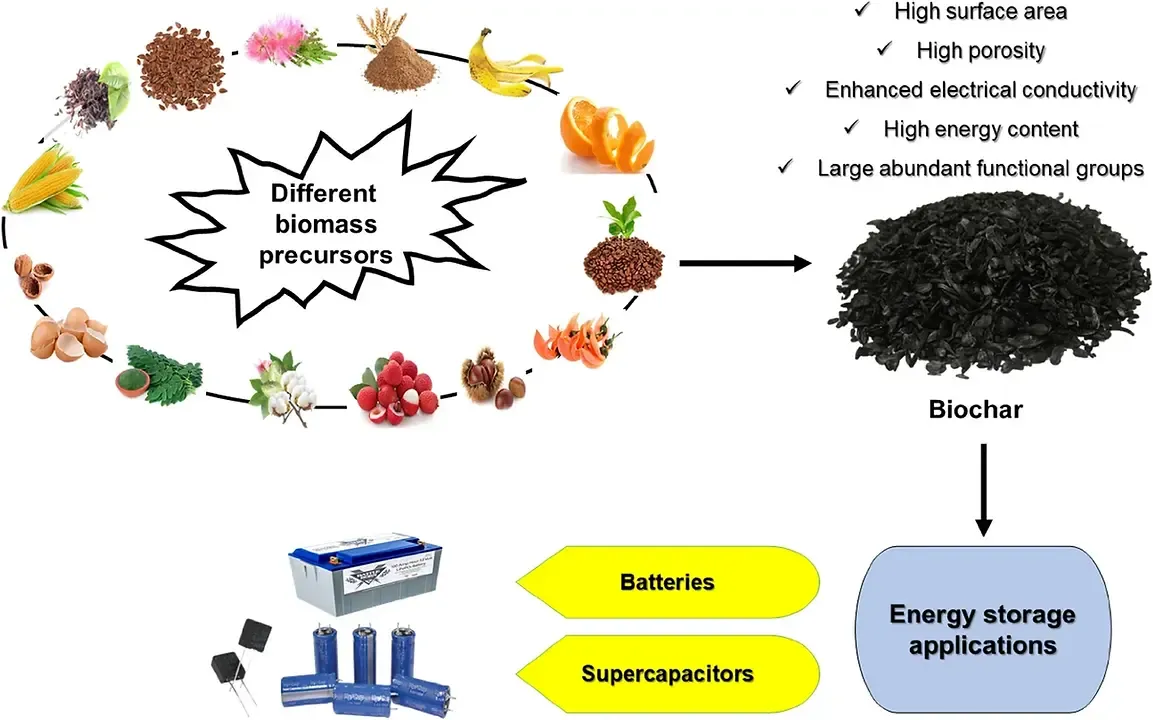
Biochar derived from biomass is illustrated schematically for use in energy storage applications. Biochar is first produced from a variety of biomass feedstocks, including fruit peel, eggshells, seeds, dedicated crops, and biomass waste precursors. Subsequently, various modification treatments are carried out to synthesise a Biochar-based material with a high surface area, high porosity, improved electrical conductivity, high energy content, and a large number of abundant functional groups. This Biochar-based material has the potential to be used in energy storage applications such as batteries and supercapacitors due to its low cost, efficiency, and active energy storage properties.
Biochar uses in energy storage applications, peer reviewed journals
- Tailoring the mechanical strength and corrosion resistance of aluminum matrix composites through biochar reinforcement at varied weight percentages
- Biochar from olive tree twigs and spent malt rootlets as electrodes in Zn-air batteries
- Study of the Suitability of Corncob Biochar as Electrocatalyst for Zn–Air Batteries
- Biochar: Empowering the future of energy production and storage
- Synthesis of Biochar From Lignocellulosic Biomass for Diverse Industrial Applications and Energy Harvesting: Effects of Pyrolysis Conditions on the Physicochemical Properties of Biochar
- Valorization of Biomass-Derived Polymers to Functional Biochar Materials for Supercapacitor Applications via Pyrolysis: Advances and Perspectives
- Actual Trends in the Usability of Biochar as a High-Value Product of Biomass Obtained through Pyrolysis
- A Review on Production and Surface Modifications of Biochar Materials via Biomass Pyrolysis Process for Supercapacitor Applications
- Metal-Supported Biochar Catalysts for Sustainable Biorefinery, Electrocatalysis, and Energy Storage Applications: A Review
- A Review of Non-Soil Biochar Applications